ProductsDocumentationHow we make thingsSupport
Join the Discord
In review on BuiltByBitRoblox game kit · Roblox Studio

Smackwater Platform fighter

Knock them off the harbour and into the sea. A complete Roblox game, ready to make your own.

Up to four fighters share a stage floating over a harbour. The more damage a fighter has taken, the farther every hit sends them, and a fighter who leaves the screen loses a stock. The full source is yours.

49.99 USDone-time, on BuiltByBit
In review on BuiltByBit Play the live game
Roblox1 to 4 playersPhone, pad, keyboardEnglish, French, Spanish
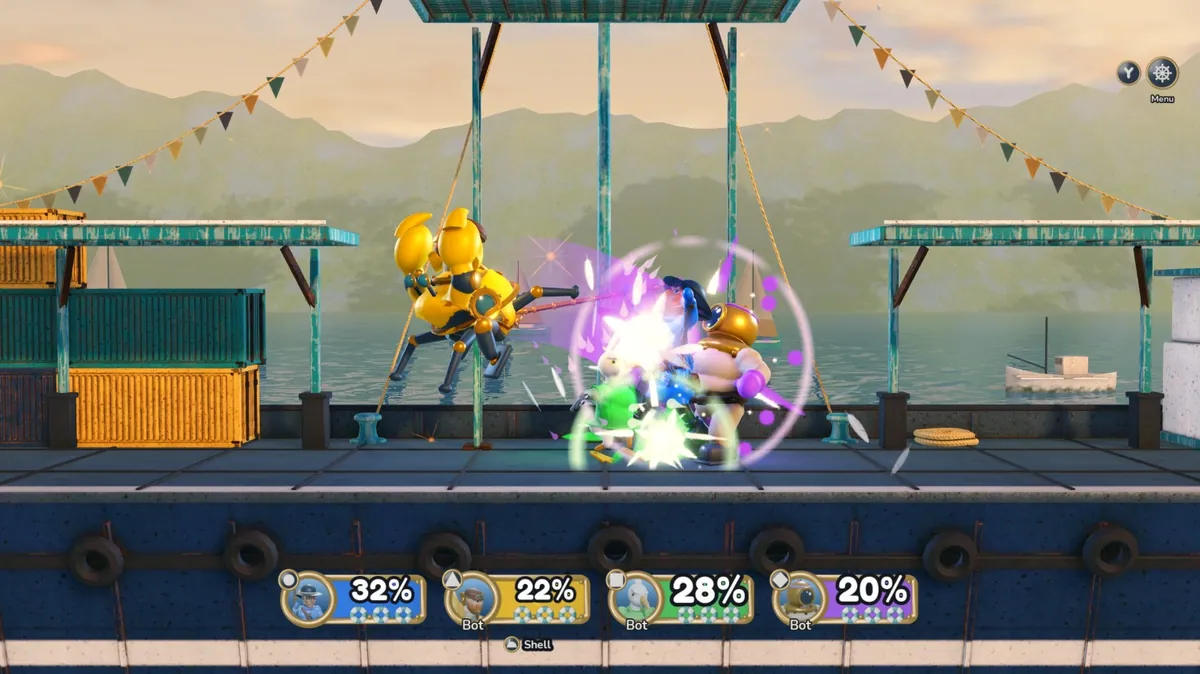
Four fighters on a barge with stacked containers and bunting at sunset: a yellow crab-shaped machine on legs leaps in from the left against three fighters locked in a burst of white and violet hit effects, with four damage chips at the bottom.
In-game capture: a four-way clash on the Regatta Barge: the Shellwright’s crab-shaped machine against three fighters in a burst of hit effects.

Why it is good

What it does, concretely.

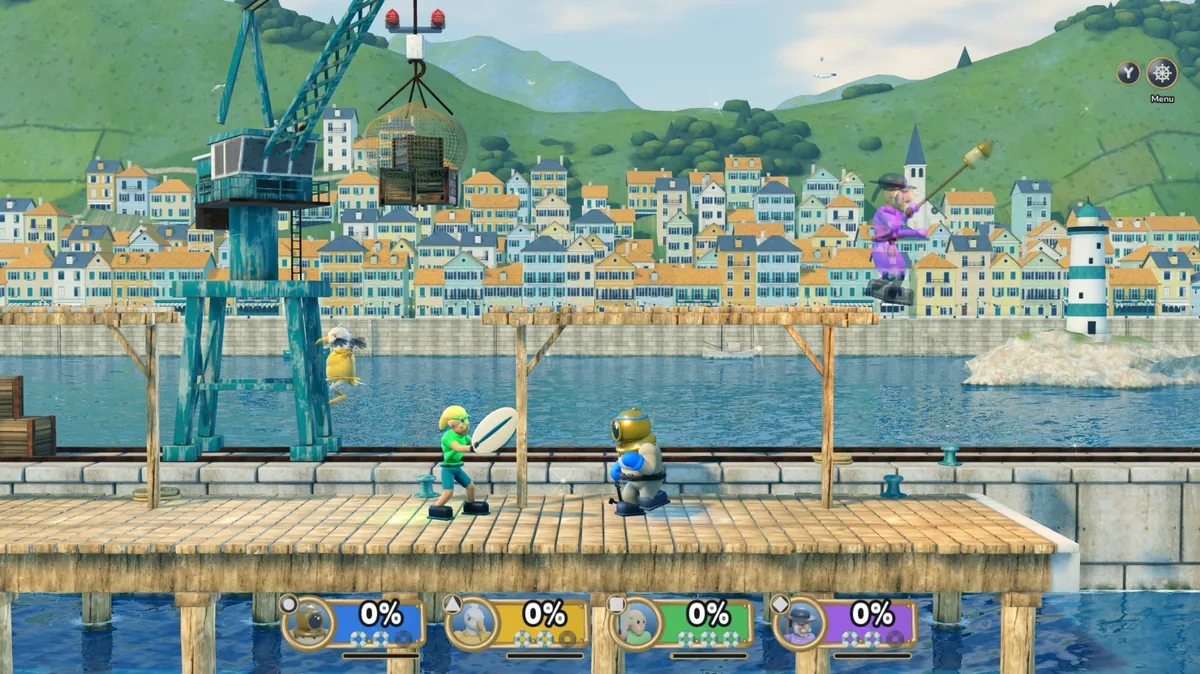
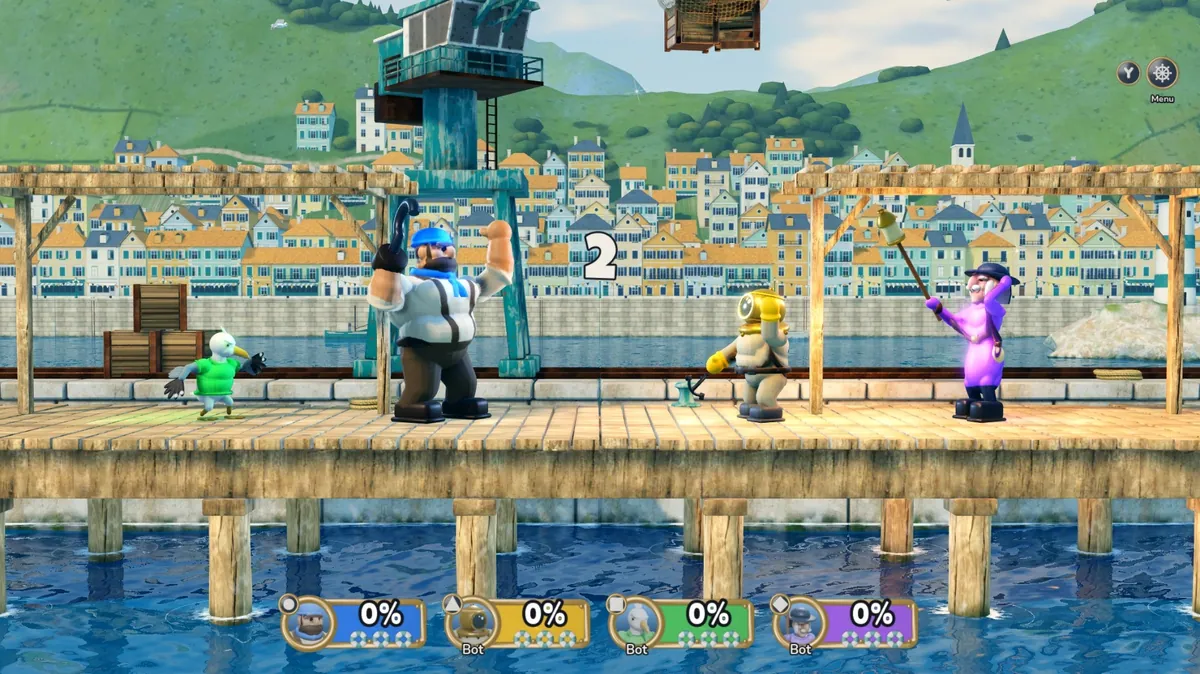
Four fighters stand on a wooden wharf in front of a crane and a harbour town on a green hillside, a large number 2 floating between them, and four damage chips at 0 % along the bottom.
In-game capture: the line-up before a match on the Wharf: four fighters, the count at 2, every damage chip at 0 %.

Nine fighters who play nothing alike

227 moves between them. Every move is a direction plus a button, the same for every fighter, and each fighter has a style of their own: an anchor’s pull, a lantern’s zone, a net, a crab-shaped machine with two stances, a skimboard’s momentum, a tide-reader’s pole and the waves she throws, a rigger’s line that hooks, swings, climbs and braces. When nobody else is around there is a Harbour Run against bots: eight rounds, a boss who changes how he fights on his last stock, ten tides above it and twelve perks to choose between matches.

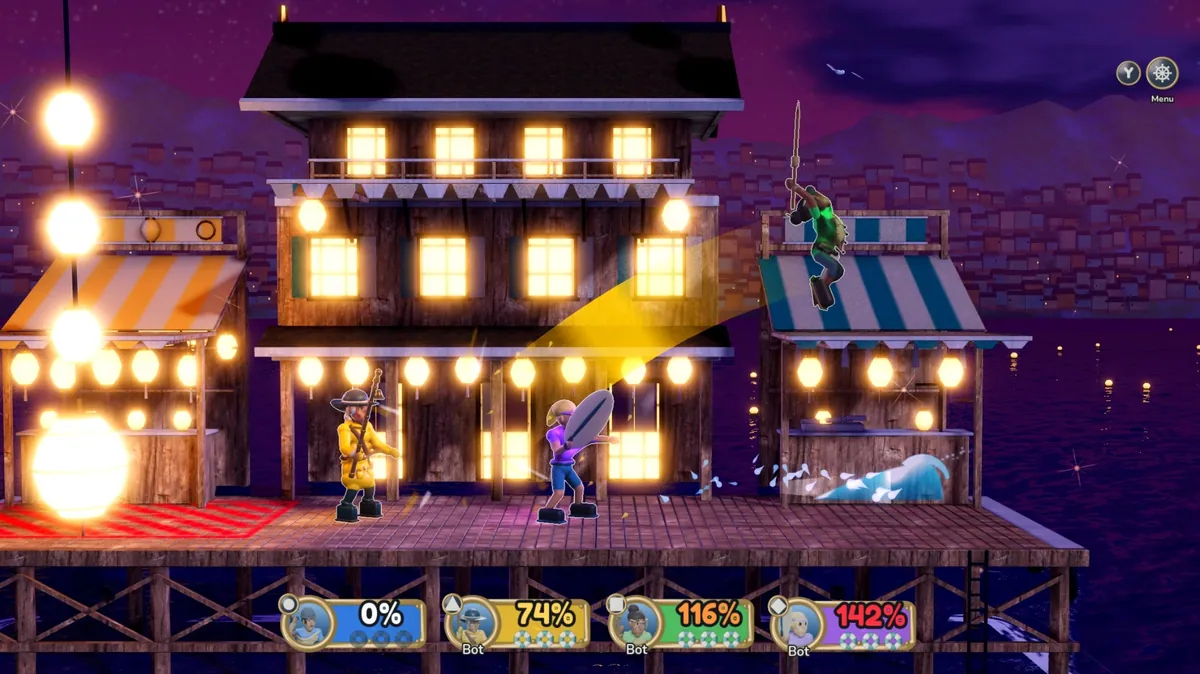
Three fighters on a wooden pier at night in front of a lit three-storey house and two striped stalls, rows of glowing lanterns, a wave of water at the right, one fighter in green leaping above the right-hand stall with a spear-like pole, and damage chips up to 142 %.
In-game capture: the Night Market: stalls, paper lanterns and a lantern flaring on the street.

Five stages that fight back

The Wharf’s crane swings its cargo net through the fight, the Rock’s waves rise over its ledges, the Barge drifts, the Ferry carries the fight from pier to pier, and the Night Market hangs strings of paper lanterns over the street: one flares, comes down and sweeps it, so stay out of its red lane. Each stage has its own music, vista and hour of day, and a flat ranked form from the same art, with the hazard off.

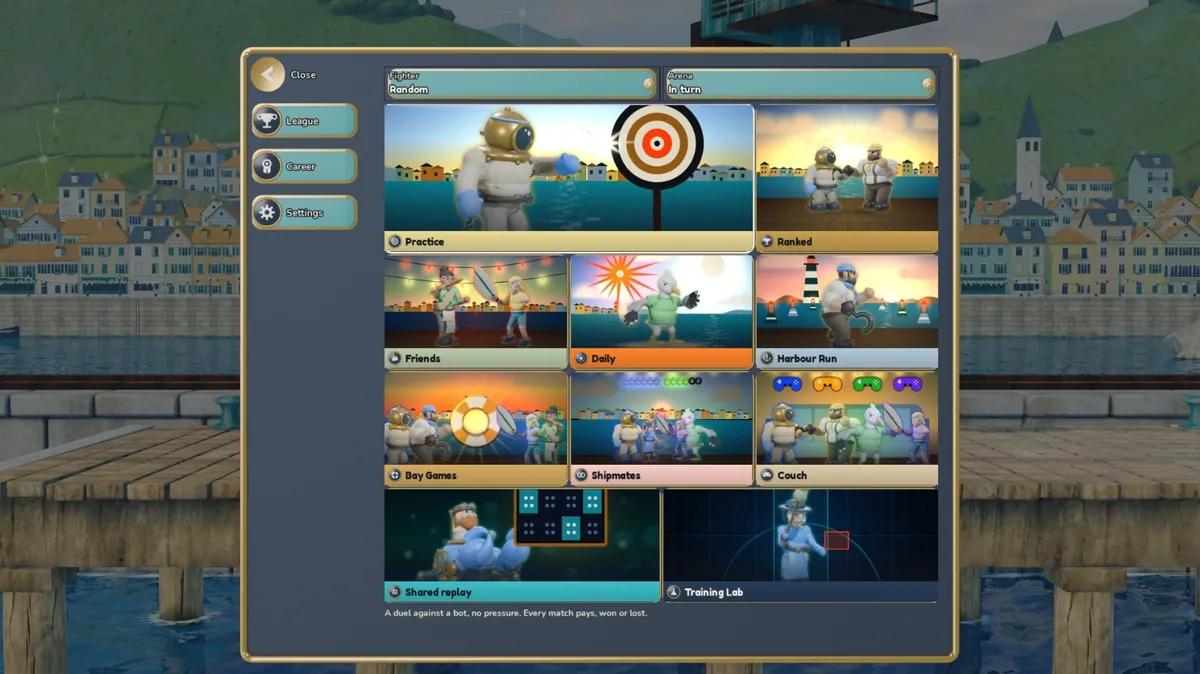
A framed menu with ten picture cards, Practice, Ranked, Friends, Daily, Harbour Run, Bay Games, Shipmates, Couch, Shared replay and Training Lab, and a one-line description of the selected mode, over the Wharf.
In-game capture: the play menu: practice, ranked, friends, the daily, the Harbour Run, the Bay Games, Shipmates, couch, shared replay and the Training Lab.

A ranked league that stays fair

Rated 1v1 and 2v2, each with its own record, on a Glicko-2 ladder: seven tiers of three divisions, eight-week seasons, a matchmaker across servers and an arena ban for each player. Results are written only by the match’s server, and the store sells nothing that changes a match. A history of your last twenty matches, a top 100 and a board of your friends are in it, next to the Lab, where you see hitboxes and frame data and train against a dummy that records.

Two fighters face each other on the wooden Wharf, a surfboard in one pair of hands and blue boxing gloves on the other, a third fighter leaping at the upper right with a brass-headed pole and a gull in a yellow vest at the foot of the crane, with four damage chips at the bottom.
In-game capture: couch play: one to four players on one screen.

Better together

Up to four pads on one screen, private rooms with your own rules, among them a best-of-three, Bay Games (six party rounds against three bots: a buoy hunt, a rising tide, a crate scramble, with a points board), Shipmates (two crews of two share their stocks; the last crew standing wins) and replays you can share by a code.

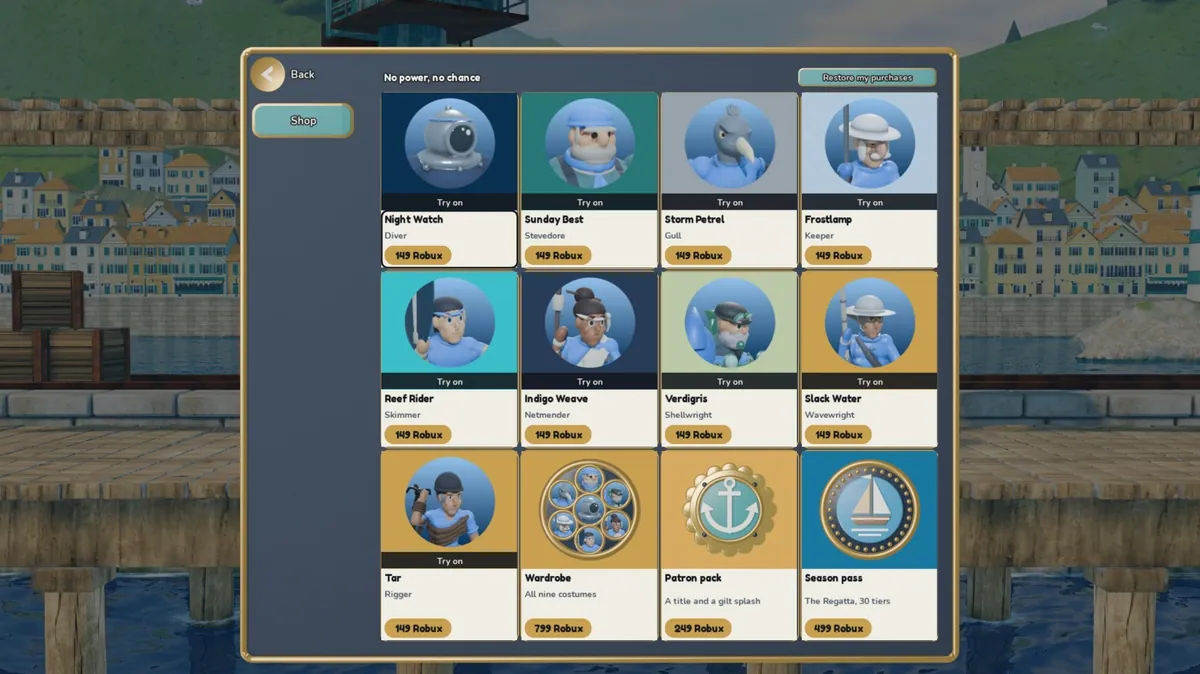
A shop window headed No power, no chance, with twelve cards: nine costumes at 149 Robux each, a Wardrobe with all nine costumes at 799 Robux, a Patron pack at 249 Robux and a Season pass of 30 tiers at 499 Robux.
In-game capture: the Shop, cosmetics only: nine costumes, the wardrobe, the patron pack and the season pass, each with its picture and its price.

Reasons to come back, and a shop that sells looks only

A daily challenge, 14 missions (10 daily and 4 weekly), 21 titles, mastery for every fighter, coins, 9 costumes and a season pass of thirty tiers for each eight-week season; the second season, the Night Fair, is in. The Shop sells cosmetics only, never power, chance or ranked points, and the game ships two seasons of them and the way to add the next. Your copy has no passes of its own: you create yours on your account.

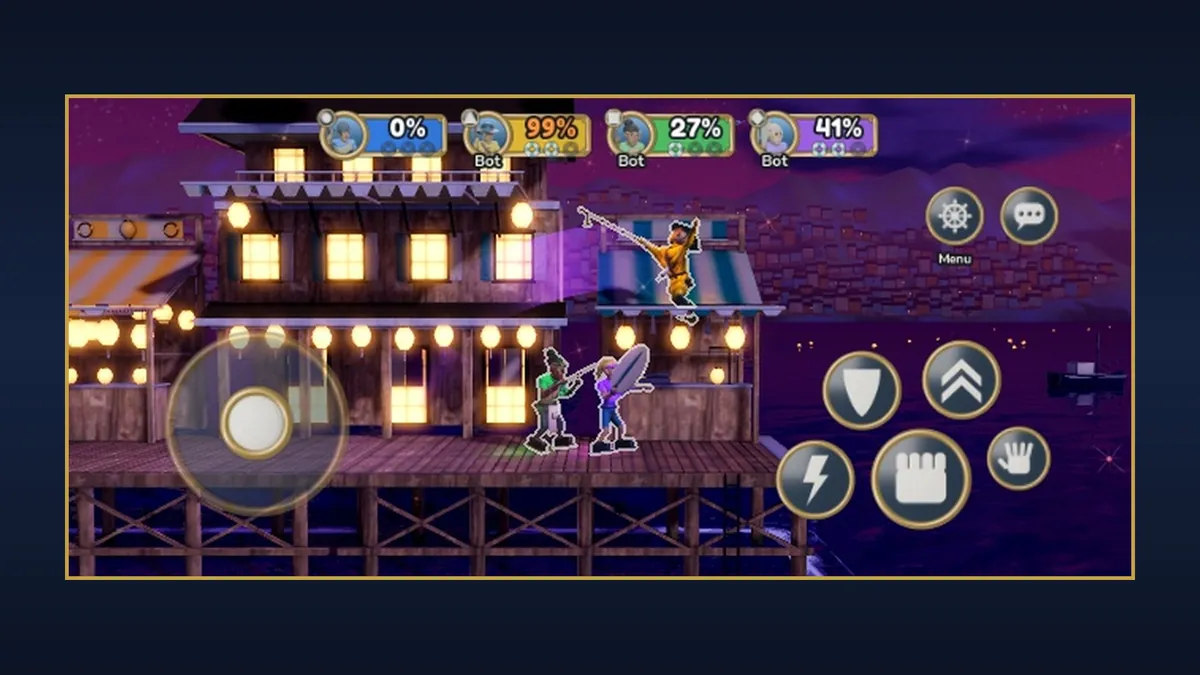
A landscape phone screen of the Night Market with a round touch stick at the lower left, six round buttons at the lower right, four damage chips along the top and two fighters fighting on the pier.
In-game capture: a match on a phone, in landscape: the touch stick and the buttons; enlarged from the phone simulator’s own small capture, on a plain background.

One fight on every device

Touch with a stick and four buttons laid out for phone and tablet, mouse and keyboard, a gamepad on PC and console, and a ten-foot interface for a TV: each has its own layout and prompts, and every screen can be reached on each. The simulation is the same 60 Hz deterministic Luau kernel on the server and in the client’s prediction, with rendering, sound and effects reading it and never changing it.

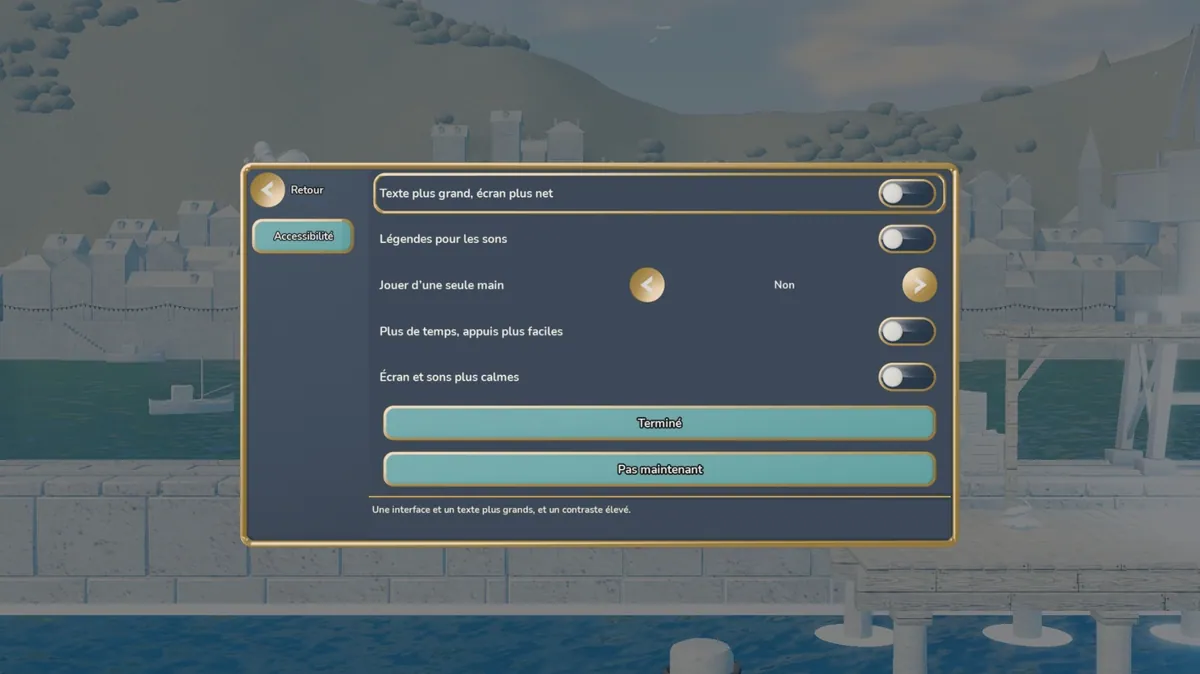
A framed window over the Wharf in French titled Accessibilité, with five rows, Texte plus grand, Légendes pour les sons, Jouer d’une seule main, Plus de temps and Écran et sons plus calmes, and the buttons Terminé and Pas maintenant.
In-game capture: the accessibility page of the first launch, here in French: larger text, sound captions, one-handed play, more time, calmer screen and sounds.

Made for every player

Text and interface sizes, a high-contrast option, sound captions and subtitles, reduced motion, colour-vision palettes, remapping on keyboard and pad, one-hand layouts, a game-speed option in the solo rooms and flash limits, offered on a page at first launch, with English, French and Spanish for everything.

In the box

What you get, and what you do not.

Included

  • The whole game as a Rojo project: its code, its tests and every data file, as plain Luau you can read, unobfuscated and DRM-free, and the built place file Smackwater.rbxl
  • Every number a fight is made of as a data file: hitstop, knockback and the input buffers, the feedback, each fighter’s stats and moves, and the items, arenas and league
  • 9 fighters with 227 moves, 5 arenas, 10 items, 12 modes, 21 titles, 14 missions and 9 costumes, counted from the data by a script of the package, with the texts in English, French and Spanish
  • What keeps a fighting game alive: the league with its seasons, a history of twenty matches and a top 100, replays you can share by a code, the Lab, a daily challenge, missions, titles and mastery, and a Shop of looks with two seasons of cosmetics
  • The Blender scripts that make every model, rig, animation clip, texture bake, interface image and effect, the scripts that synthesise the game’s own sounds and music, and the tools that upload them to your own Roblox account
  • A gate that checks your copy in one command: 151 test suites, 1,215 deliberate breakages of the code that the tests must catch, bots that play the real rules from fixed seeds to hold the balance, and the place build (164 steps, 10 min 1 s on the developer’s desktop while it was in use)
  • Install and read-me guides, the licence, a changelog and a credits page for everything that is not ours, and LICENCE_CHECK.md, which says what the advisory licence check sends

Not included, said plainly

  • The built art. You build it: the package ships the scripts that make every model, texture, icon, effect and sound (about 1,340 uploads in all: 951 images and models and 389 sounds) and the tools that upload them to your own Roblox account; none of the developer’s own art, models or sounds is in it. Until built, the game builds and plays with plain shapes where a model should be and nothing drawn from art, so it can be run, tested and changed on day one. Expect hours of Blender and upload time, plus Roblox’s moderation.
  • Your own experience, your Roblox account, its passes and your Open Cloud API key: you create those. A game with no pass shows no store.
  • The developer’s experience, its passes, its store images and page texts.
  • Other people’s play: the league is rated from real matches, so your copy starts with an empty ladder.
  • A finished game by the developer’s own measure. Five of the thirteen rows of his completeness table are under the floor he would not sell below: 9 fighters of 10, 5 arenas of 8, 9 shop costumes of 10, 1 voiced fighter of 10 and 5 music pieces of 10. The other eight rows are at or past their floor.

Where to buy

Try it first, then buy it once.

Try it first

Play the live game

The game itself is free on Roblox, with its art built — the kit can be one release behind it.

Requirements

Tools
Roblox Studio and a Roblox account; a shell (Git Bash on Windows); Rokit, which installs Rojo, Lune, StyLua, Selene, luau-lsp and uv; Blender 5.2 to make the art; an Open Cloud API key to upload it
Players
1 to 4 per match, on one screen or online
Devices
Phone, tablet, PC, gamepad and console
Languages
English, French and Spanish
Delivery
Sold and delivered by BuiltByBit; an optional licence key and a client-area copy; an advisory licence check
How delivery works
BuiltByBit sells and delivers Smackwater: you download the package from your BuiltByBit account and it works as it is. A licence key is optional: ask the developer for yours and your client area gives you a copy of the kit with the key already written in it. The kit carries an advisory licence check that only ever writes a line to your server’s output, and LICENCE_CHECK.md in the package says exactly what it sends.

How it was made

Said the same way here and on the listing.

Each BuiltByBit listing carries a disclosure about how its product was made. We reproduce it word for word, so this site never says anything the listing does not.

How it was made

The listing’s text

The game was designed and directed by its developer. The code, the tests, the Blender scripts, the audio scripts and the game’s texts (the names, the lore and every screen’s words, in English, French and Spanish) were written by an AI coding assistant (Claude Code) under that direction, then checked by automated tests and a gate that runs on every change. No AI-generated image, texture, sound or 3D model is inside the product: every visible object comes from a Blender script, the surface textures are CC0 libraries (Poly Haven, ambientCG), and every sound and every piece of music is synthesised by the scripts in audio/.

About the pictures

The listing’s text

Every picture on this page is a capture of the running game, taken through Roblox Studio; none is generated by an image model. The link-preview image is one of those captures with the title set over it afterwards in the game’s own title face, and the phone picture is the phone simulator’s small capture enlarged on a plain background. The capture tooling cannot record play, so there is no gameplay footage here.

Questions

Before you buy.

Do I get the art?

You get the scripts that make it. The package ships the Blender and Python scripts that build every model, texture, icon and effect, the scripts that synthesise every sound and piece of music, and the tools that upload them to your own Roblox account. The captures on this page show the game with its art built. Until you build it, the game builds and plays with plain shapes where a model should be.

Can I play it before I buy?

Yes. The live game is free on Roblox: it is the game the kit is made from, with its art built. The kit can be one release behind it.

How was it made?

The developer designed and directed it. The code, the tests, the Blender scripts, the audio scripts and the game’s texts were written by an AI coding assistant (Claude Code) under that direction, then checked by automated tests and a gate. No AI-generated image, texture, sound or 3D model is inside the product. The disclosure further down is the listing’s own, word for word.

Is anything in it not made by you?

Yes, and it is named. The surface textures come from two CC0 libraries, Poly Haven and ambientCG, which a script fetches rather than ships, and the package includes the ProfileStore library (Apache 2.0). Every sound and every piece of music is synthesised by the package’s own scripts, so there are no licensed audio files to credit. The credits page lists all of it with links.

Does the game call anything outside Roblox?

One call, disclosed: the kit asks the seller’s licence service, a moment after a server starts, whether its key is known. The check is advisory: it never switches a feature off or touches your data, it does nothing in Studio, and it can be deleted. LICENCE_CHECK.md says exactly what it sends. The game also sends its events to Roblox’s own analytics.

How much can I change?

Every number a fight is made of is a data file: hitstop, knockback and the input buffers, each fighter’s stats and moves, and the items, arenas and league. After a change, one command runs the move lint, the knockback table, the bots’ balance matrix and the mutation check that hold the rules together, and another rewrites the frame data of every move. The code is plain Luau.

What is smaller than it should be?

The developer keeps a table of what a complete game of this kind holds, with a floor under which he would not sell it, and five of its thirteen rows are under that floor in this package: fighters (9, floor 10), arenas (5, floor 8), shop costumes (9, floor 10), voiced fighters (1, floor 10: only the Gull has voice cues) and music pieces (5, floor 10: one for each arena, none for the hub or the league). The other eight rows are at or past their floor. This is a game you can play, rank and sell cosmetics in, and it is smaller than its developer wants it to be.

What has not been proven?

As of the listing (13 October 2026): the game has been played by its developer and by almost nobody else (3 visits, 0 playing, 1 favourite and 1 up vote on Roblox that day), and the league has never run between two real people. Its balance comes from bots that play the real rules from fixed seeds, not from crowds: on the official seed the matrix puts 18 of the 36 fighter pairs inside 40 to 60 % at the expert level and 14 of 36 at the regular level, so a few pairs are lopsided. Nobody has listened to the sounds (they are measured, not heard), and the feel of the nine fighters is tuned in numbers, not by hands on a pad. Not run in the developer’s last checks: a real phone, TV, console or two pads at once, earbuds, the 60 frames per second budget of the newest build on a quiet machine, the 2v2 with four real players, the Robux prompt of a pass, and the French and Spanish names of the Night Fair read by a native speaker. A few defects are open and none loses a player’s progress or stops a match: at the lowest graphics levels the Night Market loses its far shore, a couch pad ignores the player’s remaps, and a stage change shows bare sea for about a second. The path from unzip to your own running experience has been run in parts, never as one session on another account.
Are the updates free?

Yes, for life, as on every Botera product. The listing’s support terms are the ones BuiltByBit shows on it.

Questions before or after you buy?

The developer answers on the Discord. There is no support queue and no reseller in between.